

Premier UV Disinfection with Daro UV


-
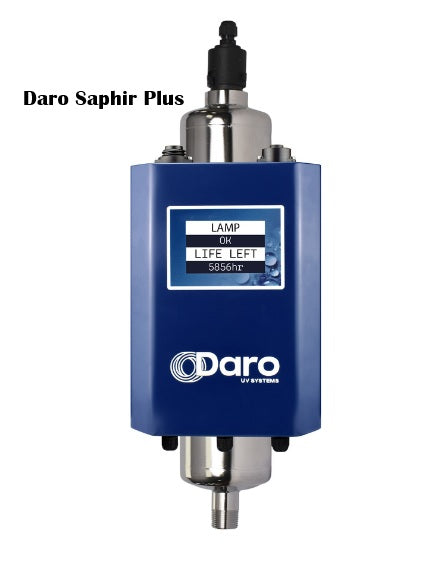
Daro Saphir + 4 UV Water Disinfection System – 60 L/min Flow Rate WRAS Approved
Vendor:DaroRegular price £1,110.00 inc. VAT£925.00 ex. VATSale price £1,110.00 inc. VATUnit price per£925.00 ex. VAT -
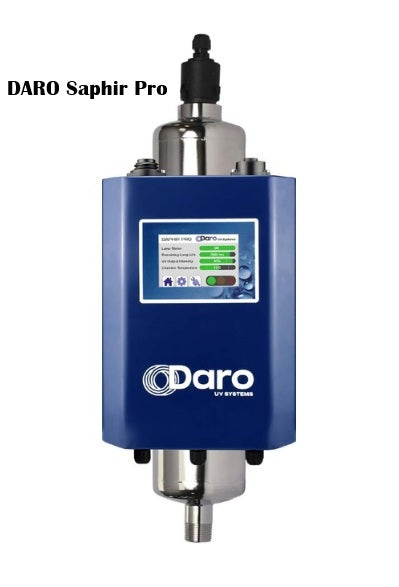
Daro Saphir 4 Pro UV Water Purification System – 60 L/min Flow Rate WRAS Approved
Vendor:DaroRegular price £2,076.00 inc. VAT£1,730.00 ex. VATSale price £2,076.00 inc. VATUnit price per£1,730.00 ex. VAT -
Daro Saphir 7 Basic UV Water Disinfection System – High-Performance 57 LPM Flow Rate Wras Approved
Vendor:DaroRegular price £1,314.00 inc. VAT£1,095.00 ex. VATSale price £1,314.00 inc. VATUnit price per£1,095.00 ex. VAT -
Daro Saphir + 7 UV Water Disinfection System – High-Performance 57 LPM Flow Rate
Vendor:DaroRegular price £1,554.00 inc. VAT£1,295.00 ex. VATSale price £1,554.00 inc. VATUnit price per£1,295.00 ex. VAT -
Daro Saphir 7 Pro UV Water Disinfection System – High-Performance 57 LPM Flow Rate
Vendor:DaroRegular price £2,394.00 inc. VAT£1,995.00 ex. VATSale price £2,394.00 inc. VATUnit price per£1,995.00 ex. VAT -
Daro Saphir 10 Basic UV Water Purification System – 160 L/min Flow Rate, WRAS-Approved
Vendor:DaroRegular price £1,914.00 inc. VAT£1,595.00 ex. VATSale price £1,914.00 inc. VATUnit price per£1,595.00 ex. VAT -
Daro Saphir + 10 UV Water Disinfection System – 160 L/min Flow Rate, WRAS-Approved
Vendor:DaroRegular price £2,274.00 inc. VAT£1,895.00 ex. VATSale price £2,274.00 inc. VATUnit price per£1,895.00 ex. VAT -
Daro Saphir 10 Pro UV Water Purification System – 160 L/min Flow Rate, WRAS-Approved
Vendor:DaroRegular price £2,994.00 inc. VAT£2,495.00 ex. VATSale price £2,994.00 inc. VATUnit price per£2,495.00 ex. VAT



Why Choose Daro UV for Water Treatment?
Frequently asked questions
Under the Water Supply (Water Fittings) Regulations 1999 (and the 2014 Byelaws in Scotland), any person proposing to install a water treatment unit that produces a waste discharge or requires water for regeneration must notify the local water undertaker at least 10 working days before work begins. While UV systems themselves do not always produce a waste stream, they are often part of a wider treatment suite (like backwashing filters) that does require consent.
Alternative water systems, including those utilizing UV sterilization for boreholes or rainwater harvesting, are considered a Fluid Category 5 risk—the highest risk level, representing a serious health hazard due to pathogenic organisms. To comply with regulations, these systems must be separated from any mains backup supply by a Type AA, AB, or AD air gap to prevent contaminated water from backflowing into the public supply.
UV systems are not "fit and forget" technologies. To ensure compliance and safety, the following is required:
- Pre-filtration: The water must be clear (typically <1 NTU turbidity). If turbidity is high, a sediment filter is mandatory because particles can "shadow" bacteria from the UV light.
- Sleeve Cleaning: The quartz sleeve must be kept free of mineral scale (calcium or iron build up), as this prevents UV rays from penetrating the water.
- Annual Lamp Replacement: UV lamps typically lose their germicidal effectiveness after approximately 9,000 hours of use, even if they still appear to be lit.