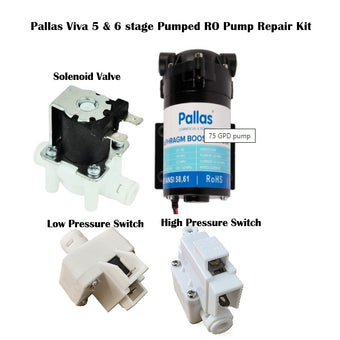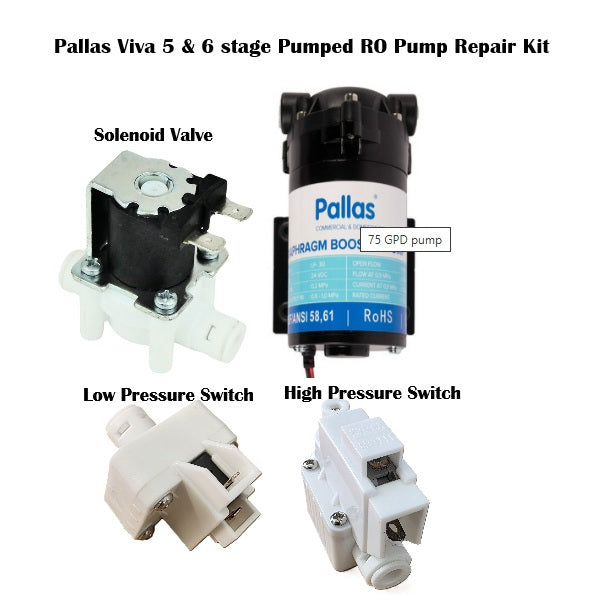
WrekinWater's booster pump repair kit renews the internal wearing parts of the pump fitted to Pallas Viva domestic pumped RO systems, suitable for both 5-Stage and 6-Stage versions rated at 75 GPD. Rather than replacing the whole pump, this kit lets you restore lost pressure and output once the diaphragm, seals and check valves inside have worn from years of cycling.
| Compatible pump | Pallas Viva booster pump, 75 GPD rated |
| Suitable for | Pallas Viva 5-Stage and 6-Stage RO systems |
| Kit contents | Internal wearing parts for the booster pump, including diaphragm, seals and check valves |
| Use | Restores pump pressure and output without replacing the whole pump |
| SKU | PALLAS-BOOSTER-REPAIR-75GPD |
| Vendor | Pallas |
Signs this needs replacing
- The booster pump runs but output pressure and permeate production have noticeably dropped.
- The pump sounds noisier or rougher than usual, or grinds during operation.
- You notice water weeping or leaking from around the pump housing.
- Production has fallen away even though the membrane and filters are known to be in good condition.
Pallas Viva systems use a booster pump to raise feed pressure so the membrane can produce water reliably, even on modest mains pressure. Every cycle flexes the pump's internal diaphragm and seals, and over years of use these wear, harden or perish, letting pressure leak internally rather than being delivered to the membrane. Renewing these parts restores the pump's original performance without the cost of a full replacement.
Buying this repair kit from WrekinWater means dealing with a family run UK business (Company No. 11000488) that has served over 50,000 customers in the past 15 years and holds an Excellent rating on Trustpilot. We stock the Pallas range alongside brands like Pentair Fleck, Autotrol, Clack and Kinetico, and can advise on which repair kit matches your pump.
How to replace it
- Isolate mains power to the RO system and turn off the water supply to the booster pump.
- Disconnect the pump's wiring and inlet/outlet tube fittings, noting their positions.
- Remove the pump from its mounting and open the housing to access the worn internals.
- Replace the diaphragm, seals and check valves with the new parts from the kit.
- Reassemble the pump, reconnect the tubing and wiring, then refit it to the system.
- Restore water and power, check for leaks, and if you're not confident stripping the pump down, have a qualified water treatment engineer carry out the repair.